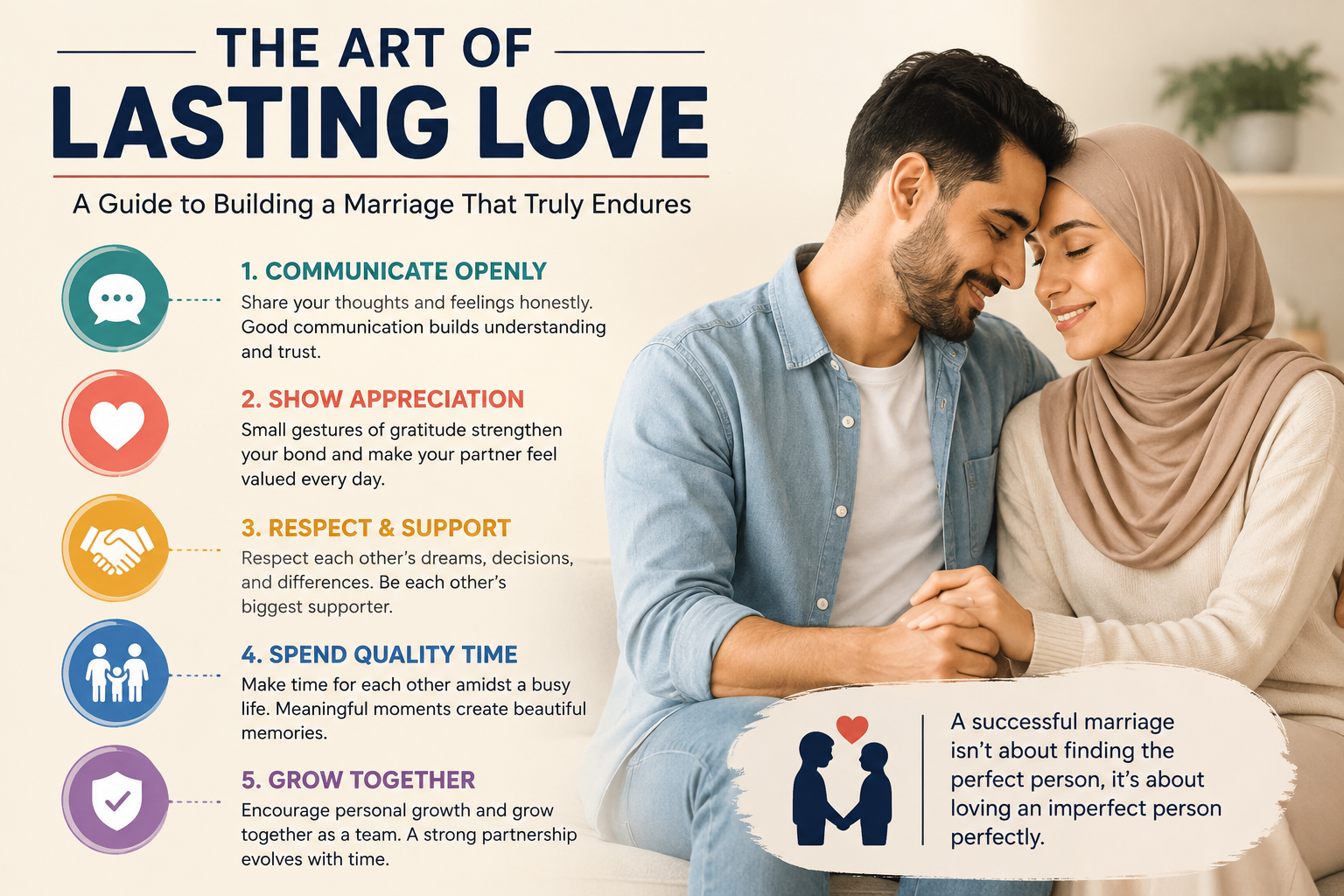
Introduction: The Journey Beyond the Wedding Day
Everyone remembers their spark moment. That first time you clicked with someone and thought, okay, maybe this one. But ask anyone who's actually been married a decade and they'll laugh a little before telling you the truth — chemistry gets you to the wedding, it's not what keeps you married.
Most of us pour all our planning energy into one day. The dress. The venue. Who's sitting where at dinner and whether Aunt Rukhsana will start something with the in-laws. Nobody plans for the morning after, or year five, or the random Tuesday when marriage just means showing up even though you'd rather not. That's the part nobody puts on the invitation card.
Here's a thing worth actually sitting with for a second: marriages that last aren't the ones where nothing ever goes wrong. They're the ones where two people, kind of clumsily at first honestly, figured out how to argue without destroying each other, apologize like they mean it, and keep coming back. That's really the whole point of everything below.
Understanding What Your Match Really Wants
A lot of relationships die quietly for one dumb, avoidable reason — nobody asked. You can have real chemistry, good conversation, that little jump when their name shows up on your phone at 11pm, and still be picturing two totally different futures without either of you realizing it.
It's usually not lying. It's just that nobody said the actual important part out loud.
💡 Key Insight: Some of it's just how brains work. When you want something badly — a real relationship, someone who replies same day, an actual future — you start noticing "proof" that they want it too. Whether that proof is even real or not.
And then, honestly, there's fear. Asking "so what do you actually want here" can feel like it might kill the whole thing. So people don't ask. They just kind of hope and see.
Except hoping doesn't save you from disappointment. It just pushes it further down the road, to a point where you're way more attached than you meant to be by then.
Skip the conversation and you usually land in one of a few places — months spent on someone who never wanted the same thing you did, feelings for someone who was never really available, or missing a genuinely good match because you were too busy hoping the wrong one would come around.
None of that had to happen. Asking straight up isn't needy. It's just being honest with yourself before you get too far in.
Nobody's saying bring up marriage on date two, relax. But once there's been a few real conversations, once something mutual is clearly there, ask. "What are you actually looking for?" "What's your ideal future look like, honestly?" Simple. Direct. Not an interrogation.
Then, more importantly — watch what they do. Someone can say "I want something serious" and still text once a week and cancel plans and never introduce you to a single friend. When the words and the actions don't line up, trust the actions every time.
You'll just know, honestly. Conversations feel easy, not loaded. Nobody's carrying the whole thing alone. No decoding required, no guessing games at midnight over what a text meant. That kind of clarity is rare, and it's basically what MatchFusion Matrimony is trying to build in early — getting people honest about what they want before three confusing months happen for no reason.
Building Trust From the Beginning
Everything else in a marriage sits on top of trust, full stop. Take that away and even the strongest attraction eventually just... falls apart. But trust doesn't get built the way people picture it in their head.
Nobody builds trust with one grand gesture — a big apology, an expensive gift, whatever. It's built by doing small, unglamorous things over and over. Calling when you said you would. Showing up on time, or at least being honest when you can't. Not repeating something your partner told you in confidence, even to your best friend, even "just this once." Each one of these looks tiny on its own. Stack a few hundred of them over two years and that's your whole foundation, right there.
Being honest doesn't mean narrating every random thought that crosses your mind. It means not hiding the stuff that actually matters — how you're feeling, what's going on with you, the uncomfortable parts. Couples who stay open about fears and expectations tend to hold together better than the ones who quietly avoid anything hard. Being vulnerable feels risky in the moment. Usually it's exactly what makes things stronger, not weaker, even though it doesn't feel that way while you're doing it.
💡 Where MatchFusion Matrimony fits into all this: Finding someone trustworthy honestly starts before the relationship even begins, with using a platform built around actual connection instead of endless swiping. MatchFusion Matrimony tries to connect people who are genuinely serious, so trust has something real to grow on from the start — not two people guessing at each other for months.
Communication: The Bridge Between Two Minds
If one thing separates the marriages that make it from the ones that don't, it's this. Not talking — actually communicating, the kind where both people walk away feeling understood instead of more confused.
Everyone thinks they're a good listener. Actually being one — where you're not already composing your reply while the other person's still talking — is rarer than people admit, including me probably. Try something like "so it sounds like you were frustrated I didn't call" or "sounds like you need more help with the kids right now." Feels small. Prevents a shocking amount of unnecessary fighting.
"You never listen to me" versus "I feel unheard when I'm talking and you're on your phone." Same complaint basically, completely different reaction. The first sounds like an attack and people get defensive instantly, every time. The second's just a feeling, and feelings are hard to argue with. Owning what you feel instead of pointing fingers changes the whole shape of the conversation.
Researcher John Gottman found four patterns that predict divorce with kind of unsettling accuracy. Criticism — going after someone's character instead of a specific behavior. Contempt — mockery, sarcasm, talking down to your partner. Defensiveness — excuses instead of owning it. Stonewalling — just shutting down completely mid-fight.
Each one has a fix, more or less. Criticism turns into "I" statements. Contempt fades when you actually practice appreciation on purpose. Defensiveness becomes owning your part, even a small piece of it. Stonewalling becomes stepping away and actually coming back, not just disappearing.
Some of the worst fights happen purely because of bad timing — 11pm, both people wiped out, one already stressed about something completely unrelated. "I need twenty minutes before we keep going" isn't running away. It's protecting the conversation from turning into something you'll both regret by morning.
Actually Fighting Without Wrecking Anything
Every couple argues, period. Anyone claiming otherwise has either checked out or is lying to you. The goal was never zero conflict — it's learning to disagree without tearing chunks out of each other while you're at it.
Stuff that actually helps: stay on the actual issue, don't drag in five other grievances from last year. Skip the name-calling — those words stick around way longer than the argument does. Drop "always" and "never," they're basically never accurate and they put people on defense instantly. If you're wrong, just say so, no "but" tacked on the end. Listen to actually understand, not to build your comeback. And know when to just pause — whatever gets said at the absolute peak of anger is usually the exact thing you'll regret most later.
💡 A real apology: names what happened, shows you actually get how it landed on your partner, takes responsibility without any excuses attached, and asks what would actually help now. Watch for the fake versions though. "I'm sorry you feel that way" quietly puts the blame right back on your partner. "I'm sorry, but..." cancels itself the second "but" shows up — might as well not have said it.
Building a Marriage That Actually Lasts
Lasting couples don't agree on everything, nobody does, that's not realistic. But they tend to agree on the big stuff — money, kids, religion, work-life balance, what kind of life they're actually trying to build. Walking through life together gets a lot easier when you're both roughly headed the same way.
Most marriages don't end with a big blowup. They drift — slowly, through a thousand tiny disconnections nobody clocks in the moment. Work piles up, kids need things, the calendar just takes over, and one day you look up and realize you're basically living like roommates who happen to split a mortgage.
Fighting the drift is small, unglamorous, daily stuff. A few minutes to actually check in. Some kind of weekly time together, even a walk around the block counts. Noticing when your partner seems off and just asking. Saying thanks for the small stuff, not only the big wins. Actually sharing what's in your head, not just logistics and calendars.
Romance doesn't fade after marriage on its own. It fades because nobody's tending to it anymore. Small surprises, an actual date, a note left somewhere random. Physical affection matters too, even the kind going nowhere — holding hands, a kiss goodbye, a hand on the shoulder walking past each other in the kitchen. Small stuff. It adds up to something that actually feels like love, over time.
Every marriage eventually hits something serious — money trouble, a health scare, a lost job, grief. These moments show you more about a relationship than years of easy times ever will. Couples who get through it tend to treat the problem as "us against this," not "me against you." They keep talking instead of going quiet on each other. They're willing to get outside help — counseling works way better used early, not saved as a last resort once things are already collapsing. And somehow they still find little pockets of joy even inside a genuinely hard season.
Financial stress ends more marriages than people like to admit out loud. Spending kept secret, debt nobody mentions until it's too big to hide — it erodes trust slowly, then all at once. Talking openly about money, building a budget together, agreeing on shared goals, and not turning honest mistakes into ammunition for the next fight — all of it genuinely helps.
No marriage survives without it. Two people can't share a life without occasionally hurting each other, even with the best intentions in the world. Forgiving doesn't mean pretending it didn't happen — it means choosing not to stay stuck in the resentment. That starts with actually naming the hurt instead of burying it somewhere, then genuinely letting it go, which almost always takes longer than people expect it to. And once it's actually forgiven, leave it there. Don't file it away for the next argument. Rebuilding real trust happens through consistency over time, not one good apology, however well-worded.
The Couples Who Make It
What tends to separate the marriages that last, based on what actually shows up when researchers look at this stuff: they stay curious about their partner even decades in, instead of assuming they've got the whole person figured out already. They say things out loud, the good and the uncomfortable both. They notice when their partner reaches for connection and actually respond, instead of brushing right past it. They stay open to being influenced instead of digging in out of pure stubbornness. They accept some disagreements just never fully resolve, and they learn to live with that instead of fighting it forever. They build shared meaning together — inside jokes, small rituals, some sense of purpose that belongs to just the two of them.
None of this is some rare talent a lucky few are born with. It's habits, built with effort, over years, usually messily. Anyone can learn them. It just takes actually treating the marriage like something worth working on, instead of assuming it'll sort itself out.
Why External Help Matters
Even strong relationships benefit from an outside perspective every now and then. Whether you're still dating, newly married, or twenty years deep, there's genuinely no shame in reaching out for support. Professional counseling gives couples tools they rarely figure out on their own. Most people wait until things are already falling apart to try it — it works far better used early, as prevention rather than repair after the damage is done.
Matchmaking services can play a role here too. MatchFusion Matrimony exists to connect people who are serious from the start, looking for the same kind of future, not just a good few months.
Your Next Steps
If you're single or dating — get honest with yourself first about what you actually want. Ask the important questions before you're too invested to hear the honest answer. Look for someone whose values actually line up with yours, not just their personality. Build trust through consistency, not big declarations. If it helps, use a platform like MatchFusion Matrimony to meet people looking for the same thing you are.
If you're already married — keep investing in how you two communicate, it's genuinely never too late to get better at it. Fight the drift on purpose, every single day, even in small ways. Ask for help when you need it — counseling is a sign of commitment, not failure, whatever the stigma says. Practice forgiveness, and actually let go of what you've forgiven instead of holding onto it quietly. Keep growing together without losing who you are on your own.
Conclusion
A lasting marriage doesn't happen by accident, however nice that would be. It takes intention, effort, and a willingness to keep growing, alone and together. The couples who make it aren't the ones who avoided every hard moment — they're the ones who faced those moments together, kept talking when it would've been easier to just shut down, and kept choosing each other even on the days love didn't feel easy at all.
The wedding's one day. The marriage is the actual adventure. And like any adventure worth having, it's best shared with someone who wants the same things you do.