Everyone manages the wedding fine. It's the fifty years after that trip people up.
Think about how much effort goes into that one day. The dress, the cake arguing over who sits where. Versus how little attention people pay to some Tuesday three years later no cameras, just the two of you and a sink full of dishes. That Tuesday is the marriage. The wedding lasts a day. The marriage lasts thousands of ones back to back.
Most people walk into it thinking love will carry them through. It does. For a while. Then it doesn't. Not on its own anyway. That's when you need skills underneath the feeling. Habits. The choice to show up when you'd rather not. No one wants to hear that on their wedding day which is likely why many people find out the hard way instead.
What "Successful" Actually Means
I think a lot of people have the idea about what a good marriage looks like. It's not one where no one ever argues. That's not a marriage that's two people who've stopped being honest with each other. It's definitely not being happy every single day. No relationship works like that. If you expect it you're setting yourself up to feel like you failed the time things get tough. And they will.
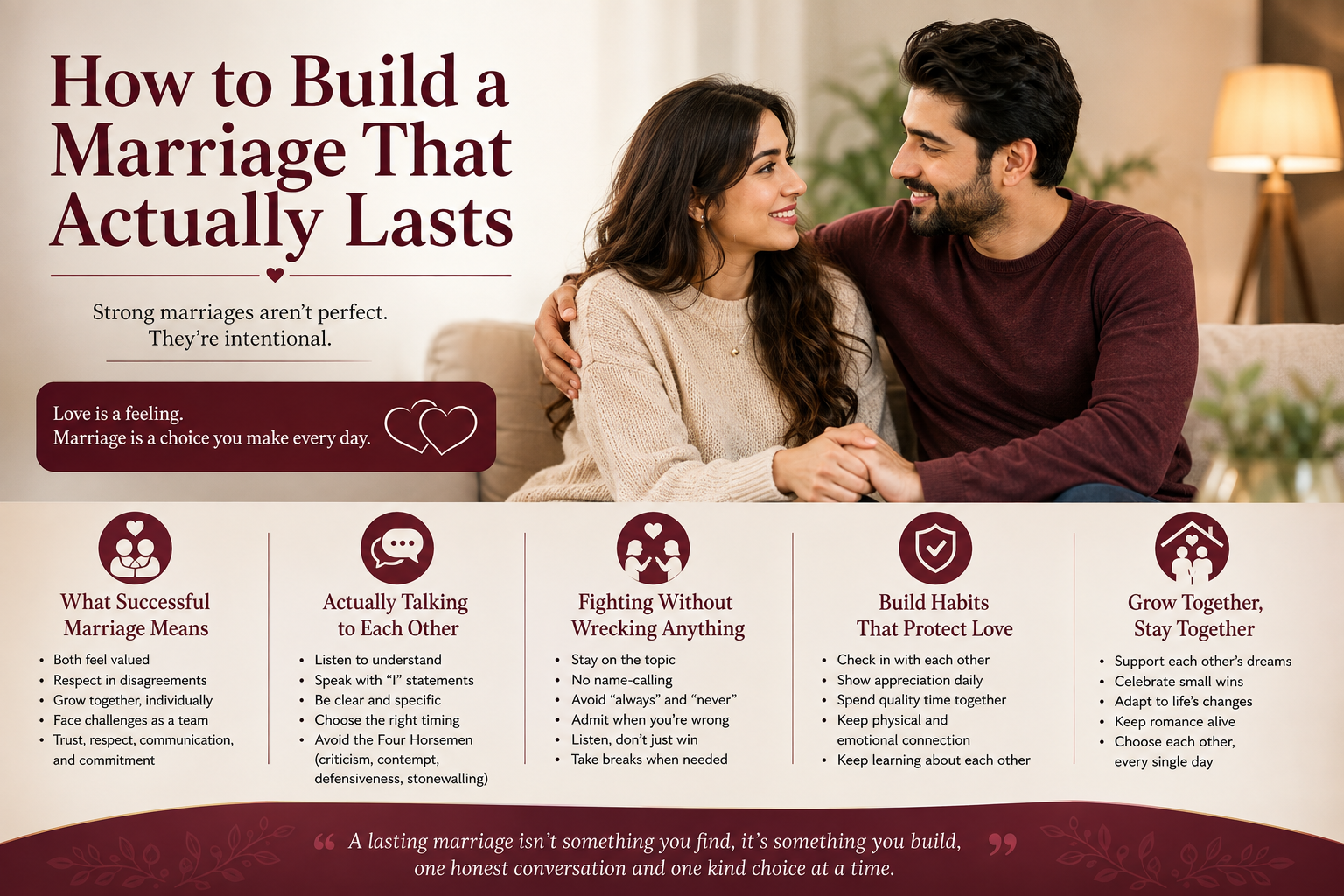
💡 What it actually looks like: both people feel like they matter. Disagreements stay disagreements never turning into attacks on character. Each person keeps growing as their individual not disappearing into "we." When something hard happens you face it together instead of slipping apart quietly.
John Gottman. Who spent his career watching couples argue in a lab, which sounds terrible but apparently taught him a lot. Found that marriages that last aren't the ones without conflict. They just fight differently.
There are maybe four things beneath all of it. Trust, which means believing your partner has your back. Respect. Seems obvious. It wears down in tiny moments no one notices, an eye roll here a flat tone there. Communication, the bridge between two minds, without which you're basically guessing. Commitment, the plain unglamorous decision to stay and keep trying especially during the times when the "in love" feeling has wandered off and hasn't come back.
Actually Talking to Each Other
Bad communication kills more marriages than any big scandal ever could. Most divorces don't come from one betrayal. They come from years of things left unsaid building up quietly until they can't be ignored anymore.
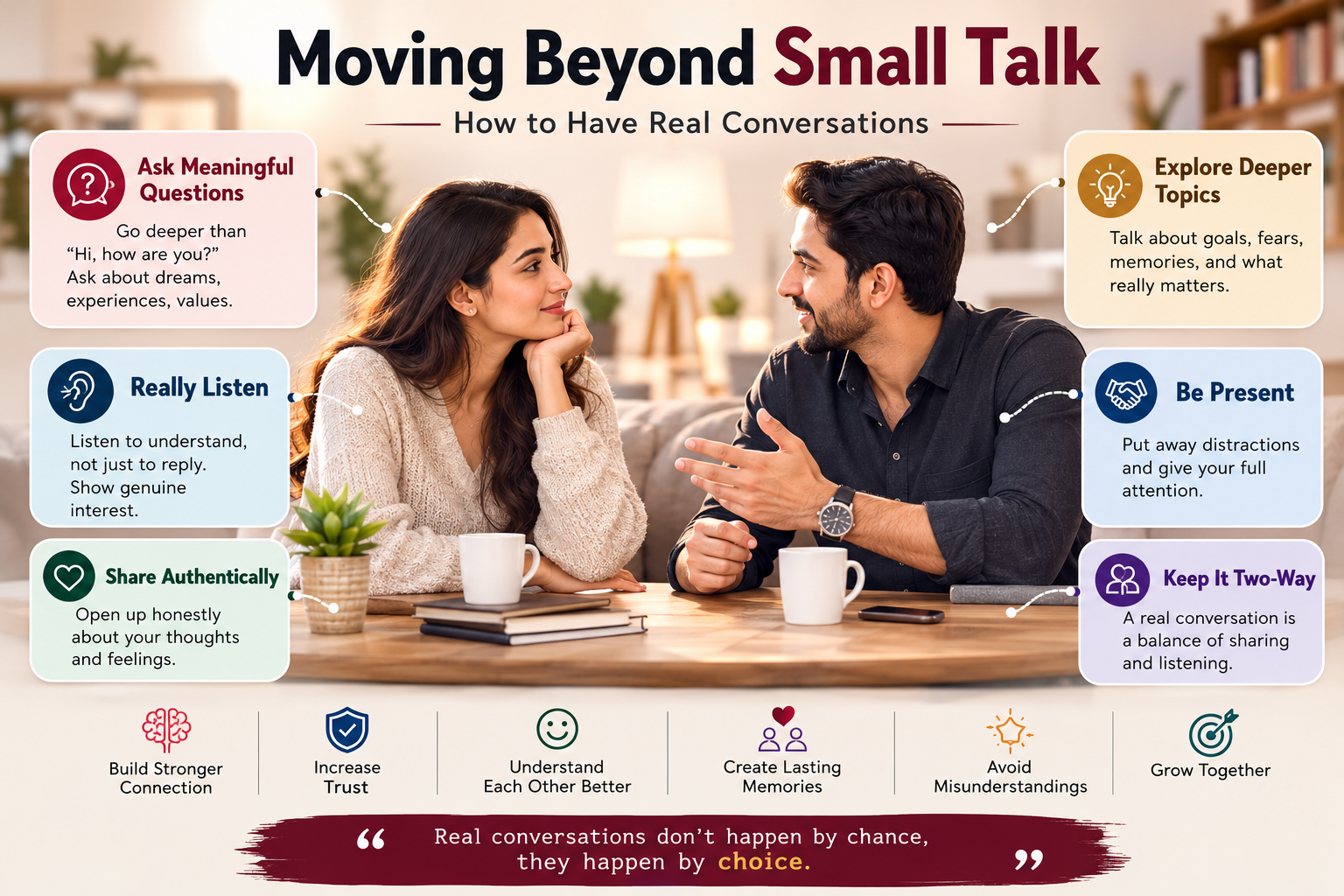
Real listening is rarer than most people realize. While your partner is talking most of us are already halfway to writing our reply in our head of actually hearing them. Just putting the phone down and saying something like "so it sounds like you were frustrated I didn't check in" can do wonders. It's such a thing and yet it changes the whole mood of a conversation.
How you phrase things matters more than it should. "You never listen to me" and "I feel unheard when I'm talking and you're on your phone" say the same thing but one is an accusation and the other is just a feeling. People get defensive fast when they're accused. It's much harder to argue with someone's feelings.
Vague complaints go nowhere. "You're not supportive". Okay. What does that mean? What should the other person do? "I'd like it if you asked about my day when you got home" at least gives them something to act on. Timing matters too. Starting a talk when someone is tired or stressed is practically asking for it to turn sour. If things heat up saying "I need twenty minutes can we come back to this?" isn't running away. It's protecting the conversation from becoming something you'll both regret later.
⚠️ The Four Horsemen: Gottman identified patterns that predict divorce with shocking accuracy. Criticism: going after who someone is of what they did. Contempt, by far the mockery, sarcasm that look that says "I think less of you now." Defensiveness, when you're preparing your argument of really hearing the other person. Stonewalling, shutting down completely.
Each one has a fix, more or less. Criticism turns into starts instead of attacks. Contempt slowly fades when you start noticing and naming what's good. Defensiveness becomes owning your part, a little bit. Stonewalling gets handled by taking a break and coming back once cooler heads prevail. Not just freezing out and staying gone.
Fighting Without Wrecking Anything
Every couple fights. Anyone who says they don't is lying or one of them checked out long ago and neither of them has said it out loud yet. Two people, lives, different families. Of course you won't agree on everything. The goal wasn't to avoid conflict. It was to learn how to fight without breaking anything.
A few things make a difference. Staying focused on the topic not dragging in three old issues from months ago. No name-calling, period. Those words stick longer than the argument itself. Avoiding "always," "never," because they're rarely true and immediately make people defensive. Admitting when you're wrong without tacking on a ". " Listening to understand of trying to win, which is harder than it sounds when your heart's racing and you're sure you're right. Knowing when to pause. Whatever comes out at the peak of anger is usually the thing you'll regret the longest.
Apologizing well is its odd skill and most people are worse at it than they realize. A real apology names what happened shows you grasp how it landed on the person takes responsibility without making excuses and asks what would help. There are phrases that sound like apologies but aren't. "I'm sorry you feel that way" shifts blame back to the person's reaction. "I'm sorry but…" undoes the apology the moment the "but" arrives. "It wasn't bad" tells your partner their feelings don't matter. People say these thinking they've fixed things. Usually they've made things worse.
The Slow Drift Nobody Notices Until It's Loud
Ask people what ended their marriage and a lot won't point to a fight. They'll describe something two people who used to talk about everything then just… stopped. Work, kids, the logistics of life. All of it slowly ate up the space that used to belong to each other. One day you wake up. Realize you're living more like roommates than partners.
The drift is dangerous because it doesn't announce itself. No one wakes up. Decides to stop connecting with their spouse. It happens through a hundred choices. Scrolling through your phone instead of talking mostly, if we're being honest.
💪 Fighting the Drift: A few minutes each day just checking in. "How was your day? what's on your mind?" Adds up more than it should. A weekly date, a free one, even just a walk around the block keeps you from becoming two people who only talk about schedules and chores.
Noticing when your partner seems off and actually asking about it tells them they're being seen. So does saying thank you for the stuff instead of treating it like it's normal. Sharing what's actually going on inside your head not the calendar matters more than people think. So does laughing together. So does touch that doesn't lead anywhere. A hand held during a movie does more for you than you'd expect.
Gary Chapman's love languages get thrown around much they've become a cliché. There's truth behind it. People feel loved in ways. Some need to hear it said clearly. Some want your full attention more than words. Some feel it through a gift. Some through actions. What you do for them. Some, through touch. Figuring out which language your partner speaks. And actually using it even when it doesn't come easily. Makes a difference larger than it should.
Keeping Some Spark in It
Many couples assume romance fades after the wedding like it's some law. It's not. It fades when no one tends to it like anything neglected. Less a rule of nature more a choice that stops getting made.
Small surprises break up the sameness. Flowers for no reason a note left unexpected. There's no rule saying flirting has to stop just because theres a ring involved now. Still going on dates dressing up sometimes going out treating it a little like you're still courting each other keeps alive something that pure routine tends to smother. Travel helps too. Even a short cheap trip away resets something that ordinary daily life just can't touch. Celebrating the stuff not only birthdays and anniversaries builds a habit of actually noticing your partner. Every so often it helps to go back to the beginning. Old photos the story of your first date. Remembering why you picked this person in the place has a way of waking something back up.
When Life Actually Tests You
Every marriage eventually runs into something. Money trouble, a health scare losing a job losing someone you love. These are the moments that show more about a marriage than the good years ever do because this is where "team" and "two people who happen to live in the same house" stop meaning the same thing.
The couples who make it through usually frame things as themselves against the problem not against each other. They keep talking instead of suffering quietly and alone because your partner can't actually help with something they don't even know is happening. They're also not too proud to get outside help. Counseling isn't some resort reserved for a marriage thats basically already over it's just a tool and using it earlier tends to work better than waiting until things are already in pieces. Even in the middle of something genuinely hard they still manage to find small ordinary pockets of joy because those little things are usually what remind you what you're actually fighting to hold onto.
Money deserves its paragraph honestly because it quietly wrecks more marriages than almost anything else on this list. Spending habits, secrets about debt. These things erode trust slowly without much noise until suddenly theres a lot of noise. Talking about money openly building a budget together of separately agreeing on shared goals and not turning honest mistakes into blame sessions all help keep this from becoming a permanent sore spot.
Not Losing Yourself in It
You genuinely can't pour into a relationship from a version of yourself. Taking care of your physical and mental health isn't selfish. It's maintenance and it directly affects how much patience you've got left over for someone else at the end of a long day. Keeping your friendships and hobbies alive matters too more than people admit. Losing your identity into the marriage doesn't make you a better partner. Often it just quietly turns you into a resentful one a few years down the road. The healthiest marriages seem to have two whole people in them not one person and their shadow trailing behind.
This cuts both ways. A good marriage actually supports each persons growth too not just the growth of the relationship itself. Celebrating each others wins, backing each others goals even when they cost something giving each actual room to breathe once in a while. None of that threatens closeness. If anything it's usually what keeps it alive over decades.
Pointing in the Same Direction
Shared values matter more than people give them credit for on mostly because at the start almost everything feels compatible. That's just how new relationships work. It's later when the real questions show up. How to raise kids, how religious to be, ambition versus balance. That any misalignment on the fundamentals starts to bite. Sitting down together and just talking honestly about where you each hope to end up helps more than most couples ever bother trying. A shared sense of direction doesn't make disagreement disappear. It just gives disagreement reasonable to land.
Forgiveness, Because You'll Need It
No marriage makes it without forgiveness because no two people go decades without hurting each other by accident even with the best intentions in the world. Forgiveness doesn't mean pretending it didn't happen. It means choosing not to stay stuck. That starts with naming the hurt of quietly burying it then actually deciding to let go of the resentment, which almost always takes longer than people expect going in. Saying it out loud plainly helps. Something like "I'm hurt. I'm choosing to forgive you and I want us to move forward". Instead of just pretending everythings fine when it isn't. Once something is genuinely forgiven, let it go. Don't quietly file it away for the fight. Rebuilding trust after something serious is its own slower separate process. That takes consistency over time not one good apology.
What the Couples Who Make It Actually Do
A patterns keep showing up in the marriages that last, versus the ones that quietly fall apart. They stay curious about each other decades in instead of assuming they've already got the whole picture figured out. They say the things out loud not just the complaints. They respond when their partner reaches out for connection in small ways instead of brushing right past it. They stay open to being influenced of digging in out of pure stubbornness. They accept that some disagreements just never fully resolve and they learn to manage them of demanding a clean winner every time. They build some kind of shared meaning together. Little rituals, private jokes only the two of them get, a sense that this particular marriage stands for something specific to them.
On the side a few newer matchmaking platforms have started trying to help earlier, in the process before any of this even begins.